
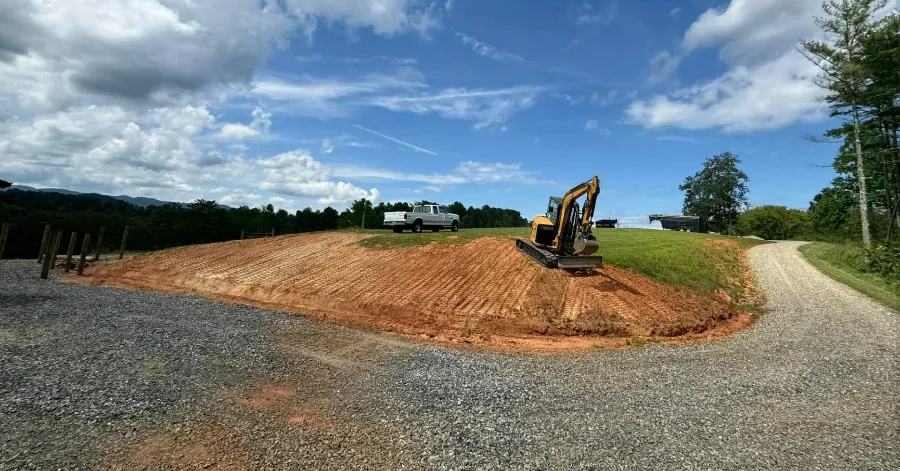
Guides
Guides for mountain ground
Straight answers on what moves the cost, which office handles the permit and how the work runs on steep, wet Western North Carolina ground.
Start here
What it costs.
No price lists. Each cost guide explains what moves the number and how to get a real one for your ground.
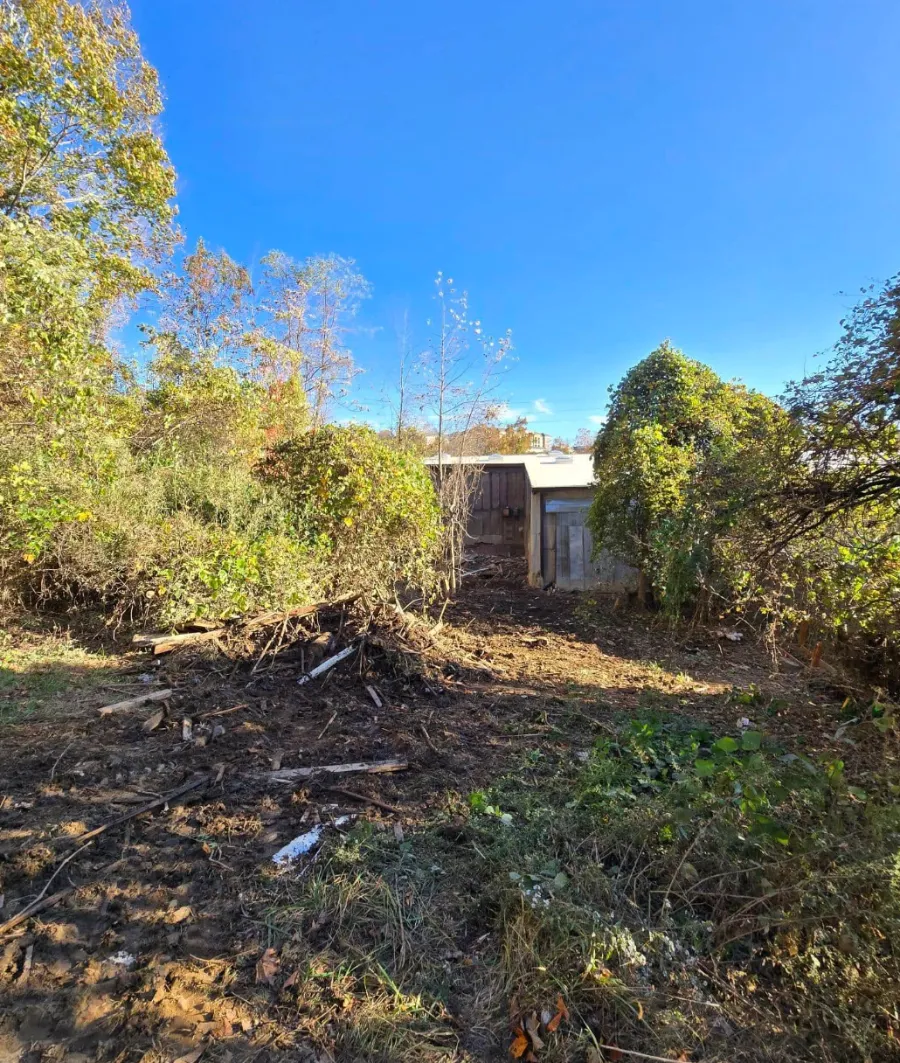
Land clearing cost in Western NC
Land clearing cost in Western NC comes down to six things: how thick the growth is, how big the trees are, how steep the ground is, how the machine gets in, what happens to the debris, and how finished the ground has to be. There is no honest flat price per acre for mountain land, which is why two lots of the same size can cost very different amounts to clear.
Read the guide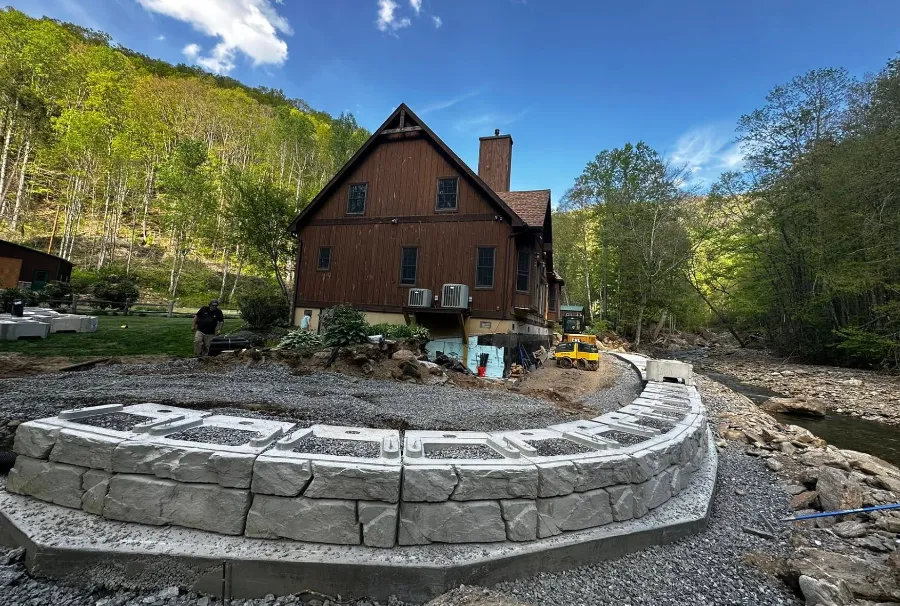
How Much Does a Retaining Wall Cost in Asheville?
A retaining wall in Asheville costs whatever its height, length, base, drainage and site access demand, so two walls of the same length can be priced very differently. The only way to get a real number for your wall is a site visit, and Hazy River Earthworks gives that estimate free.
Read the guide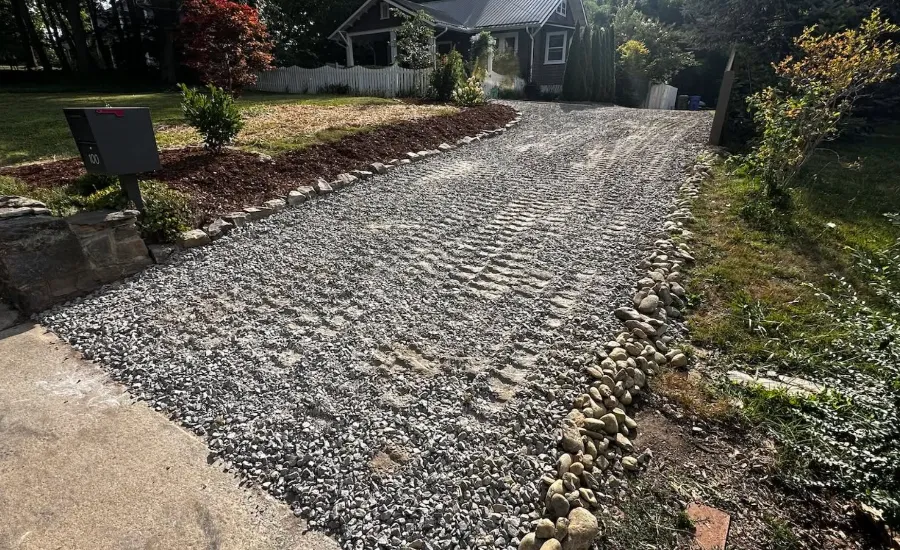
Gravel Driveway Cost in Western NC, Explained
Gravel driveway cost in Western North Carolina depends mostly on length, slope, how much cutting and drainage the route needs, and how much stone it takes to build a solid base. A short drive on gentle ground is a small job, while a long drive climbing a ridge with culverts and ditches is a much bigger one, so the real number comes from walking the route.
Read the guide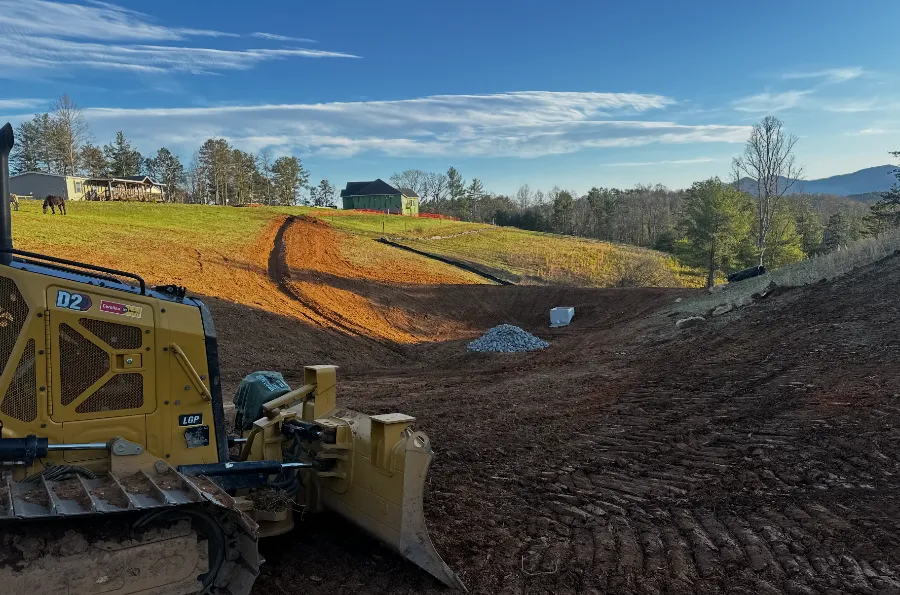
Grading cost in Western NC: what moves the price
Grading cost in Western North Carolina depends on how much soil has to move, how steep the ground is, what the soil is made of, how much fill comes in or spoil goes out, access, drainage and erosion control. A price per acre rarely fits a mountain site, so the dependable number comes from a free estimate after someone walks the ground.
Read the guide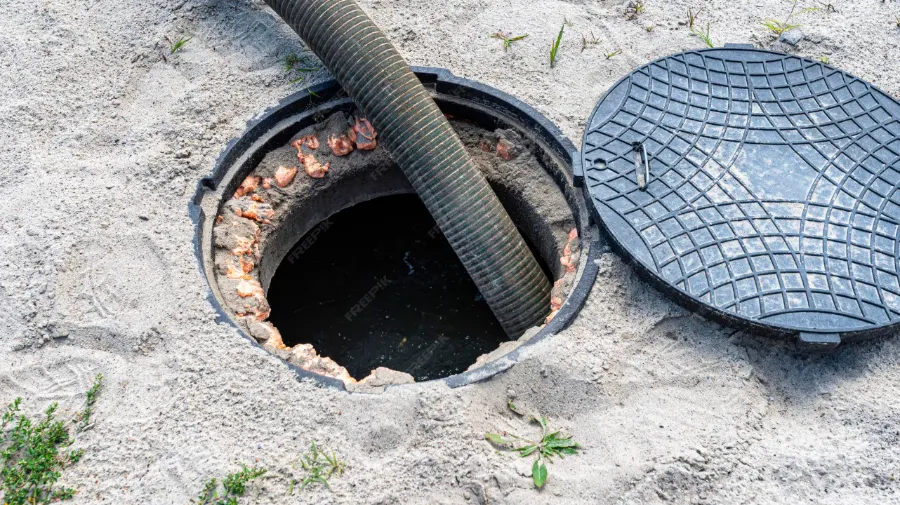
Septic system installation cost in Western NC
Septic system installation cost in Western North Carolina depends on the system the county permits, the soil and slope, rock, how far the tank and field sit from the house, and how hard the site is to reach. There is no fair flat price for a mountain lot, so the honest number comes from a free estimate on the ground once the permit is in hand.
Read the guide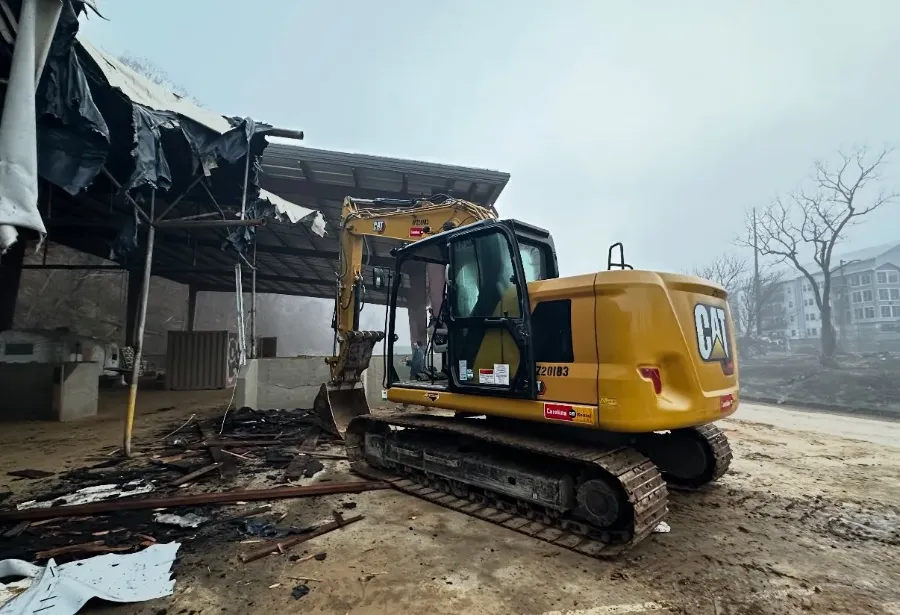
House demolition cost in NC: what moves the price
The cost to demolish a house in North Carolina depends on the size and build of the house, whether it has a basement or slab, any asbestos that must come out first, access, how much debris has to be hauled and how finished the site has to be. There is no fair flat figure, so the honest number comes from a free estimate on site.
Read the guide
Concrete Removal Cost in Asheville: What Sets the Price
Concrete removal cost in Asheville depends on how much concrete there is, how thick it is, whether it has steel in it, how close a machine and truck can get, and how far the broken concrete has to travel. A thin patio beside the drive is a small job, while a thick, reinforced slab behind a house on a slope is a much bigger one.
Read the guide3 guides
Retaining Walls
Wall types, the drainage behind them and who to ask about a permit before a wall goes in.
Boulder vs Block vs Timber Retaining Walls
Block walls give the most predictable, straight and well-drained result, boulder walls suit a natural look where big stone is on hand, and timber walls are the shortest lived because wood rots in wet ground. Hazy River Earthworks builds block retaining walls, and this guide compares all three honestly so you can choose.Read the guideGuideRetaining Wall Drainage Explained
A retaining wall needs a way for water to get out from behind it, usually a perforated drain pipe at the base, clean stone behind the blocks and fabric to keep soil out of that stone. Without it, water pressure builds in the soil and pushes the wall out of line, which is why most failed walls are really failed drainage.Read the guideGuideDo You Need a Retaining Wall Permit in Buncombe County?
In Buncombe County, a wall system with more than 10 feet of cumulative height falls under the county retaining wall ordinance and needs a certificate of compliance from Planning, a building permit and an engineer's sign-off. Shorter walls can still need a building permit or an engineered design depending on height, location and what they hold up, so check with the county before you build.Read the guide4 guides
Erosion & Creek Banks
Keeping soil on a slope and a creek bank where it belongs, and the county rules for opening ground.
Land Disturbance Permits in Buncombe County, Explained
Buncombe County requires an erosion control permit, also called a land disturbing permit, before you disturb one acre or more, or a quarter acre or more in a hillside subdivision. Below those sizes you must still keep sediment on your own property with measures like silt fence, and the county Erosion Control Division at Planning and Development answers questions.Read the guideGuideErosion Control on Steep Slopes: Methods That Hold
To stop erosion on a steep slope, control the water coming onto it, cover the bare soil, and ease or support the grade where it is too steep to hold itself. On Western North Carolina hillsides that usually means a mix of diversion above the slope, seed and mulch or rock on the face, and regrading or a retaining wall where the ground keeps moving.Read the guideGuideHow to Stop a Creek Bank From Eroding
To stop a creek bank from eroding, protect the toe where the water cuts, lay the bank back to a slope that can hold, and armor or plant it so the next flood cannot pull it apart. On mountain creeks after a storm like Helene, that usually means rebuilding the bank with rock and fixing the runoff above it, and work in the stream can need a permit first.Read the guideGuideRiprap for Creek Banks: What It Is and When It Works
Riprap is a layer of large, angular stone placed on a creek bank or channel to take the force of moving water so the soil underneath cannot wash out. It works when the stone is big enough for the flow, sits on fabric or a gravel bed, and is keyed into the creek bed at the toe.Read the guide4 guides
Driveways & Gravel
Stone, slope, culverts and fill: what makes a gravel drive in the mountains hold up.
Building a Gravel Driveway on a Steep Hill
A gravel driveway on a steep hill holds up when it follows a sensible route, sits on a thick compacted stone base and sheds water off the surface at regular points instead of letting it run downhill. On a steep driveway the drainage matters more than the gravel, because running water is what strips the stone and cuts the ruts.Read the guideGuideABC Stone vs Crusher Run: Gravel Types for a Driveway
ABC stone and crusher run are close cousins: both are crushed stone mixed with fine dust, which is what lets them pack down hard. In North Carolina ABC stands for aggregate base course, and for a gravel driveway it is the usual choice for the compacted base, often with a cleaner stone spread on top.Read the guideGuideDriveway Culvert Guide for Western North Carolina
A driveway culvert is a pipe that carries ditch water under your drive, and in the mountains it is often the difference between a drive that lasts and one that washes out every storm. Its size depends on how much water reaches it, and where a drive meets a state road, the NCDOT District Engineer sets the size through a driveway permit.Read the guideGuideFill Dirt vs Topsoil: Which One Your Project Needs
Fill dirt is subsoil with little organic matter, used to raise grade, fill holes and build pads because it compacts and stays put. Topsoil is the dark, living top layer that grows grass and plants, so it goes on last and in a thin layer, never under a building, a slab or a drive.Read the guide4 guides
Land, Lots & Storm Cleanup
Getting raw or storm damaged land ready to build on, clear or use again.
How to prepare land for construction in WNC
Building on raw property starts long before concrete is poured. The land has to be cleared, shaped, stabilised, drained and prepared to carry what goes on top of it — and in the mountains of Western North Carolina, steep slopes, heavy growth, runoff and changing soil make that harder than it looks.Read the guideGuideBuilding on a Steep Lot in Western North Carolina
Building on a steep lot in Western North Carolina works well when the earthwork is planned first: the building pad is usually part cut and part fill, the drive has to climb to it, and every bit of runoff needs a planned path. Expect more site work than on flat ground, and plan the pad, drive, septic area and drainage together before any dirt moves.Read the guideGuideForestry mulching vs land clearing: which one you need
Forestry mulching grinds brush, briars and small trees where they stand and leaves the mulch on the ground, while land clearing removes trees, stumps and root balls so the ground can be graded and built on. Mulching suits views, trails, fence lines and overgrown lots, and full clearing suits house sites, pads and drives.Read the guideGuideStorm Debris Removal After Helene in Western NC
Storm debris removal on private land in Western North Carolina is now mostly up to the owner, because Buncombe County's roadside pickup and its private property program have both closed. A crew with an excavator and a dump truck can pull out downed trees, flood silt and wrecked structures, haul it all away and regrade the ground so it drains again.Read the guide4 guides
Septic, Utilities & Demolition
Perc tests, septic systems, water lines and taking old structures down.
Perc test in Western NC: what happens and how to get ready
In Western North Carolina, a perc test is really a soil and site evaluation done by the county environmental health office, or by a private evaluator under state options, before a septic permit is issued. The evaluator checks slope, soil texture, wetness and depth to rock, and the result decides whether, where and what kind of septic system the lot can have.Read the guideGuideHow long does a septic system last?
A septic system can last for decades when the tank is pumped on schedule and the drain field is protected, but no fixed number of years fits every system. How long yours lasts depends mostly on the soil, how it was installed, how much water goes into it and how well the drain field is treated.Read the guideGuideHow deep to bury a water line in NC
Under the North Carolina plumbing code, as explained by the NC Office of State Fire Marshal, the top of a buried water service pipe must sit at least 12 inches below grade or below the frost line, whichever is deeper. In the mountains, confirm the frost depth for your address with the local building inspections office before you trench.Read the guideGuideMobile home demolition in NC: removal and site cleanup
Mobile home demolition in North Carolina means tearing down the old home, loading and hauling the debris, pulling the piers, skirting and porches, and leaving the lot cleared for what comes next. Before work starts, the utilities must be disconnected, the local permit checked and the state asbestos rules confirmed with the right office.Read the guideQuick answers
The short version
Short answers from the guides. Open any one for the full story.
What is the average cost per acre to clear land in Western NC?
There is no useful average. Growth, tree size, slope, access and what happens to the debris change the price more than the acreage does. A free estimate on the ground is the only number worth relying on. Read the guide.
How much should I expect to pay for a retaining wall?
It depends on the wall's height and length, the base and drainage it needs, how easy the spot is to reach and how much dirt has to be hauled. A low wall in an open yard and a tall wall below a house are very different jobs. A free estimate is the only honest way to get a number. Read the guide.
How much does it cost to install a gravel driveway in Western NC?
It depends on the length, the slope, how much cutting and drainage the route needs, and how much stone it takes. Ben walks the route with you and gives you a price on site, before work starts. Read the guide.
How much does it cost to remove a concrete slab in Asheville?
It depends on the size, thickness and steel in the slab, how a machine and truck can reach it, and how far it is hauled. Ben looks at it on site and gives a free price before work starts. Read the guide.
How much does it cost to put in a septic system in Western NC?
It depends on the system type the county permits, slope, rock, distance from the house and access. A flat figure from the internet does not account for any of that. The estimate is free and done on the ground once the permit is issued. Read the guide.
How much does it cost to demolish a house in NC?
It depends on the house size and build, basement or slab, asbestos, access, haul distance and how finished the site has to be. No flat figure fits all of that. A free estimate after walking the house gives you a real number. Read the guide.
Free estimate
Tell Ben what
the ground needs.
Send the details and Ben will come out, walk the property with you and give you a price before anything starts. If it is easier to talk it through, call.
Leicester, NC · Asheville & Western North Carolina · Fully insured