
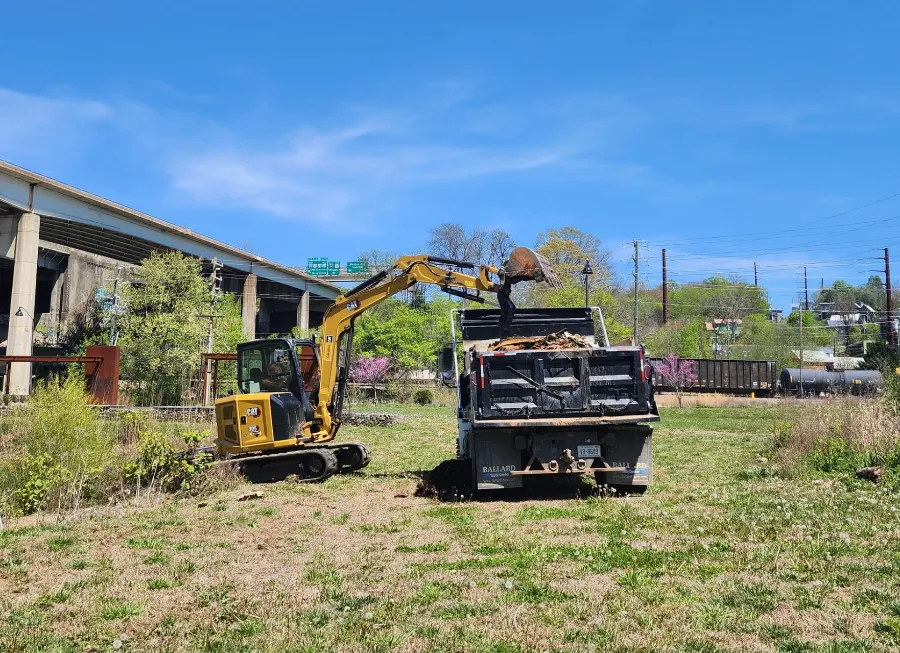
Storm debris removal on private land in Western North Carolina is now mostly up to the owner, because Buncombe County's roadside pickup and its private property program have both closed. A crew with an excavator and a dump truck can pull out downed trees, flood silt and wrecked structures, haul it all away and regrade the ground so it drains again.
Where the county programs stand now
Right after Hurricane Helene in late September 2024, the counties ran large cleanup missions. In Buncombe County, right-of-way debris pickup ended on April 1, 2025. Applications for the Private Property Debris Removal program closed on April 15, 2025. Both facts come from the county's Helene debris management page.
That means a pile still sitting in a hollow, a pasture or a creek bottom is the owner's job to clear. The county points residents with leftover debris to the Buncombe County Landfill on Panther Branch Road in Alexander, and fees apply there. If you live outside Buncombe County, check with your own county about what it offered and whether anything is still open.
What storm debris is still out there
Two years on, the debris we see most is the kind nobody could reach in the first months. Trees that came down across steep hollows. Root balls tipped out of the bank. Sand, silt and cobble the water dropped across a yard or a field. Gravel that washed off a drive and ended up in the ditch or the creek.
There are also wrecked outbuildings, collapsed decks, twisted fencing and old culvert pipe that the flood pulled loose. Some of it is tangled together, wood mixed with soil and rock. That mix is why storm debris takes a machine and a plan, not just a chainsaw and a weekend.
How storm debris removal works on a mountain property
It starts with a walk. Ben looks at what is on the ground, how a machine and truck can get to it and where the water ran during the storm. Hung limbs and leaning trees are dealt with before anyone works under them.
Then the debris is pulled out with an excavator and sorted as it is loaded. Wood, soil, rock and building scrap go different places, so sorting on site keeps haul-off simple. Loads go out by dump truck. Flood silt is scraped back off the ground it buried. When the pile is gone, the ground is shaped so it sheds water again. Our debris removal and hauling work covers the loading and the trucks; the regrading is the part that keeps the next storm from doing the same thing.
Debris in or near a creek
A lot of what Helene left is along creeks and rivers. Debris jammed against a bank, a pipe or a bridge can push water sideways and cut the bank away in the next high flow. Pulling it out is often the first step of fixing the bank.
Work in a stream channel or right at its edge can need a permit, and the rules depend on the stream and the work. We raise that at the estimate so it is sorted before the machine goes near the water. If the bank itself has been cut back or undercut, see our creek and river bank repair work, where banks are rebuilt with rock after the debris is out.
Storm-damaged sheds, barns and structures
A building the flood shifted, crushed or filled with mud is debris too, just a bigger piece of it. Utilities have to be disconnected before it comes down, and a building demolition often needs a permit from the county or city. Anything that needs abatement should be flagged before work starts.
Once that is sorted, the structure is taken down by machine, the wreckage is loaded and hauled, and the footprint is cleared. Concrete slabs and footings can come out at the same time. Our demolition page covers which structures we take down. Doing the structure and the loose debris in one visit saves a second trip and a second setup.
What moves the price of debris cleanup
The biggest factor is volume: how many truckloads the job fills. Next is access. Debris at the bottom of a steep hollow takes longer to reach and load than a pile beside the drive, and a long, soft or washed-out drive may need work before a truck can get in.
The type of debris matters as well. Clean wood, flood silt, rock and building scrap are handled and disposed of differently, and mixed loads take more sorting. Disposal fees and haul distance add to it. Finally, there is what happens after: a quick smooth-over costs less than regrading a field or rebuilding a drive. Ben prices all of it at a free on-site estimate, before any work starts.
Fixing the ground after the debris is gone
Clearing is only half the job. Helene changed where water runs on a lot of properties. Ditches filled in, pipes blocked, and drives became channels. If the ground is not reshaped, the next big rain follows the same path and does the same damage.
After cleanup we can regrade the area, cut or clean ditches, reset culverts and rebuild washed-out drives. Washed-out drives and private roads have been some of the most common work in the region since the storm. See driveway installation and repair for how a drive is rebuilt so it sheds water instead of carrying it.
The short version
- Buncombe County's right-of-way pickup ended April 1, 2025, and private property program applications closed April 15, 2025.
- Leftover Helene debris on private land is now the owner's to clear and dispose of.
- Volume, access, debris type, disposal and regrading set the cost of a cleanup.
- Work in or beside a creek can need a permit, so raise it before the machine arrives.
- Regrade and fix drainage after cleanup, or the next storm repeats the damage.
Quick answers
Quick answers
Who removes storm debris from private property in Buncombe County now?
The owner, in most cases. The county's private property debris program stopped taking applications on April 15, 2025. A crew like ours can load and haul it, or you can take leftover debris to the county landfill in Alexander, where fees apply.
Is Hurricane Helene debris pickup still running?
Not along the roads in Buncombe County. Right-of-way pickup there ended on April 1, 2025. If you live in another county, call its offices to confirm what is still open.
Can you haul away a storm-damaged shed or barn?
Yes. Storm-damaged structures are taken down, loaded and hauled, and the site is cleared. Utilities must be disconnected first, and a permit may be needed for a building.
Will insurance pay for storm debris removal?
Some policies include a debris removal allowance and some do not. Read your policy or call your insurer. We can give you a price for the cleanup to send them.
See our material hauling & debris removal service or call (828) 900-1749.