
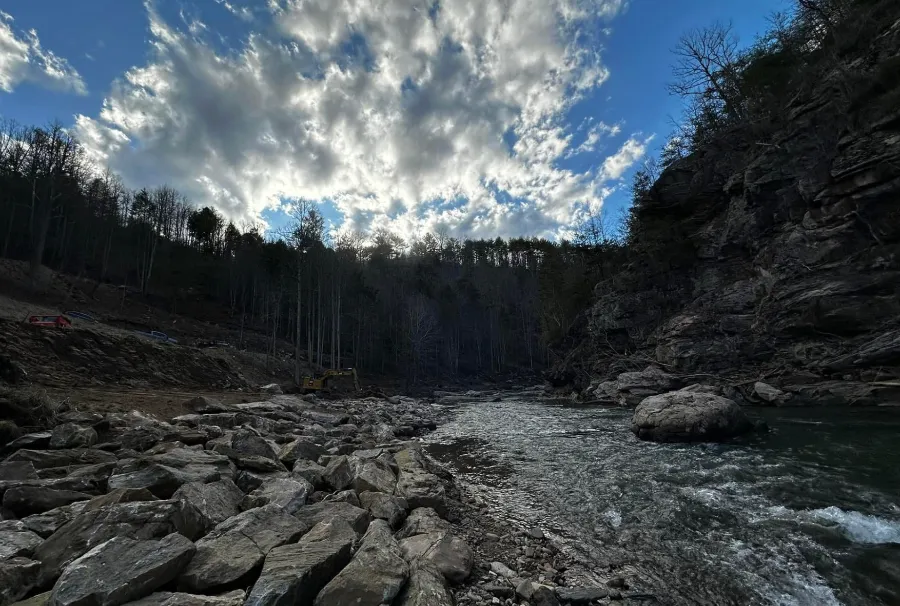
Riprap is a layer of large, angular stone placed on a creek bank or channel to take the force of moving water so the soil underneath cannot wash out. It works when the stone is big enough for the flow, sits on fabric or a gravel bed, and is keyed into the creek bed at the toe.
What riprap is
Riprap is quarried stone with sharp, broken faces. Those angles let the pieces lock against each other, so a layer of it acts like one heavy blanket instead of a pile of loose rocks. It comes in size classes, from stone you can lift by hand to pieces that take a machine.
That is the difference between riprap and round river rock. Smooth stones roll when water pushes them. Angular stone wedges in place. Riprap is used along creek banks, at the end of culverts, in ditch lines and on any slope where water runs fast enough to carry soil away.
Where riprap makes sense on a creek
Riprap earns its place where the current hits hard. The outside of a bend, a bank right below a culvert or bridge, and a spot where the flow narrows are all common candidates. So is a bank that has already been cut back by a flood and now sits close to a yard, a drive or a house.
It is less useful on gentle inside bends or upper banks that only see water during big storms. Those areas can often be held with grading and plants. Many good repairs use riprap low on the bank and vegetation above it. If a pipe under your drive is cutting the bank, our culvert and driveway pipe work covers the outlet side too.
How riprap is installed on a creek bank
Good riprap work starts with shaping, not stone. The bank is cut back to a slope gentler than the raw, undercut face so the rock has something stable to lie on. A trench is dug along the toe, below the creek bed, so the bottom row of stone is locked in and cannot be undermined.
Fabric or a bed of smaller stone goes down next. It stops soil from washing out through the gaps. Then the stone is placed, starting at the toe and working up, with each piece set against its neighbors. The ends are tied into solid ground so water cannot get behind the rock. Dumping riprap from the top of the bank skips most of these steps.
Sizing the stone for the flow
The right size depends on how fast and deep the water gets in a flood, not on a normal day. A creek that runs ankle deep in summer can carry huge force in a storm. Hurricane Helene moved boulders and rebuilt channels across Western North Carolina, which shows how much power mountain streams hold.
Steeper channels and tighter bends need bigger stone. Stone too small for the flow gets carried off one piece at a time until the bank is bare again. On larger streams, or where the bank protects a home or a road, an engineer may size the stone. On smaller creeks, Ben will talk through size and supply at the estimate.
Why riprap fails
Most riprap failures trace back to a few causes. Stone that is too small washes away. A toe that is not dug in gets undercut, and the whole layer slides into the creek. Without fabric or bedding, water pulls soil out through the gaps and the rock slumps into the holes.
Other failures come from the edges. If the ends are not tied into firm ground, the creek works around them and erodes the bank behind the stone. A face left too steep lets rock tumble. Runoff pouring over the top can wash out the soil behind the riprap from above. Each of these is avoidable when the work is planned and placed with care.
Permits and plants alongside riprap
Placing stone in a creek is work in a stream. Buncombe County's erosion control FAQ says that needs a US Army Corps of Engineers permit. State rules also call for an undisturbed buffer at least 25 feet wide from the top of the bank along trout waters during land-disturbing work. Check both before any stone goes in.
Riprap also works well with plants. Native shrubs and grasses above the rock hold the upper bank and shade the stream. For the bigger picture of bank repair, see our guide on how to stop creek bank erosion.
Getting riprap work done
Riprap is heavy and has to be moved both ways. Stone is trucked in and placed where it is needed, while debris, downed trees and flood-deposited material are loaded and hauled off. Our hauling covers that trucking as part of the job.
Ben will walk the bank with you, look at where the water is cutting and give you a price before anything starts. For photos of rock bank work, see the creek and river bank repair page. To set up a free estimate, call (828) 900-1749.
The short version
- Riprap is angular quarried stone that locks together to shield a bank from moving water.
- It needs a keyed-in toe, fabric or bedding, and ends tied into solid ground.
- Stone size must match flood flows, not normal water levels.
- Round river rock rolls; angular riprap stays put.
- Work in a stream needs an Army Corps permit, so check before stone goes in.
Quick answers
Quick answers
What size riprap do I need for a creek bank?
It depends on how fast and deep the creek runs in a flood, how steep the channel is and how sharp the bend is. Larger streams or banks protecting a home or road may need an engineer to size it.
Do you need fabric under riprap?
Yes, or a bedding layer of smaller stone. Without it, water pulls soil out between the rocks and the riprap sinks and slides.
Can I use river rock instead of riprap?
Round river rock rolls when water pushes it, so it does not hold a bank well in fast water. Angular quarried stone interlocks and stays in place.
How long does riprap last on a creek bank?
Stone does not wear out, so well-sized riprap on a keyed toe and fabric can hold for many years. Most failures come from small stone, a weak toe or loose ends, not from the rock itself.
See our creek & river bank repair service or call (828) 900-1749.