
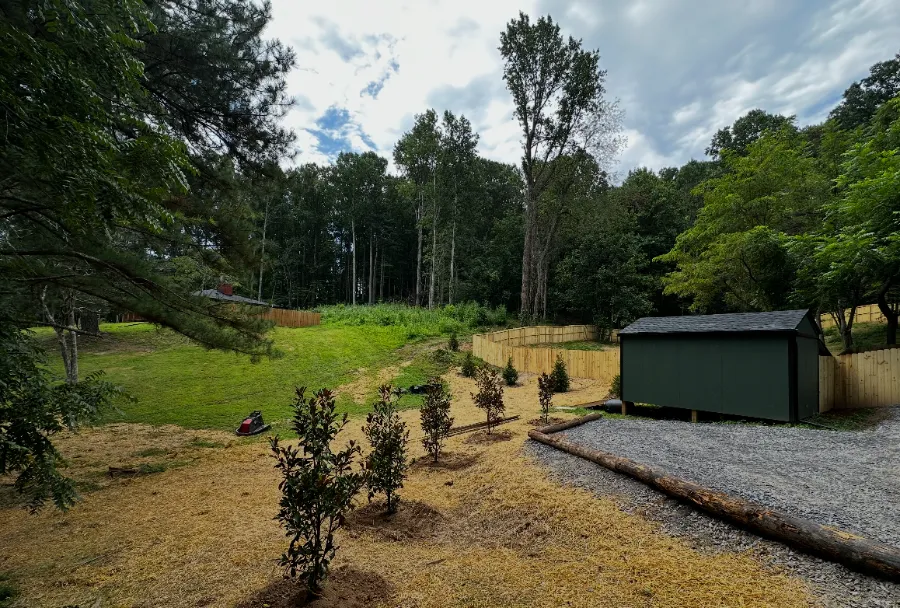
A septic system can last for decades when the tank is pumped on schedule and the drain field is protected, but no fixed number of years fits every system. How long yours lasts depends mostly on the soil, how it was installed, how much water goes into it and how well the drain field is treated.
The tank and the drain field age differently
A septic system has two main parts. The tank holds back solids and lets liquid flow out. The drain field spreads that liquid into the soil, where it is treated.
Tanks tend to show trouble through cracks, failed baffles or a broken lid. Drain fields fail more quietly, when the soil around the trenches clogs and stops taking water. The field is the costlier part to replace and the harder part to fix. That is why most care advice is really about protecting it. When people ask how long a septic system lasts, they usually mean how long until the field gives out.
What shortens a septic system's life
Skipping pumping is the big one. When sludge builds up, solids wash out to the field and plug the soil. Too much water does damage as well, whether from a running toilet, a leaky fixture or every load of laundry on one day.
Driving or parking on the field crushes pipe and packs the soil. Tree roots grow toward the moisture and into the lines. Roof drains and runoff pointed at the field flood it. Grease, wipes and household chemicals add up over the years. On mountain lots, a field below a steep slope can also take on water from uphill every time it rains.
Pumping and inspection on schedule
The EPA says household septic tanks are typically pumped every three to five years, and that the average system should be inspected at least every three years. Systems with pumps or float switches need checking more often.
Your household size and tank size change that schedule, so ask the company that pumps it what fits your system. Keep a record of each pump out and where the lids are. Sketch the tank and field on a plan of the lot so nobody digs or builds on them later. Those records also help when you sell, because buyers and their inspectors often ask for them.
Keeping water away from the drain field
In the mountains, surface water is the field's biggest enemy. Runoff from a driveway, a roof or the slope above can saturate the soil so it cannot take what the house sends it.
The fix is usually grading, done around the system rather than on top of it. A swale or diversion above the field carries surface water past it. Gutters and downspouts are piped somewhere else. Low spots near the field are shaped so rain runs off instead of pooling. Keep machines off the trenches while this work is done. Our drainage and water diversion work handles this kind of problem on steep lots across Western North Carolina.
Signs a septic system is near the end
Slow drains through the whole house, gurgling pipes, a sewage smell in the yard, soggy ground or bright green grass over the field, and backups after heavy rain all point to trouble. One sign alone can be a simple clog. Several together usually mean the field is struggling.
If you think the system has failed, call your county environmental health office. In North Carolina a repair needs its own authorization, and the county decides what the fix has to be. Do not dig around a failing field yourself, since untreated sewage in the soil is a health risk to you and your neighbours.
When a new system is the answer
Sometimes an old field cannot be saved and a new one has to go in, either in a different part of the lot or a repair area the county approves. That is new septic work: a permit, a design and careful digging to the plan.
Our crew digs the tank hole, cuts the drain field trenches to the depth and fall the county sets, then backfills and grades over the finished field. For what moves the price of that work, read the septic installation cost guide, or see our septic installation page. Call (828) 900-1749 for a free estimate.
The short version
- A well cared for system can serve for decades, but there is no fixed lifespan.
- The drain field usually wears out before the tank does.
- EPA guidance: pump a household tank every three to five years and inspect it at least every three.
- Keep vehicles, trees and runoff away from the drain field.
- A failed system needs a county repair authorization before any digging.
Quick answers
Quick answers
How many years does a septic system last in NC?
There is no set number. Soil, installation, water use and maintenance decide it. Systems that are pumped on schedule and kept free of traffic, roots and runoff can last for decades, while neglected ones can fail far sooner.
How often should a septic tank be pumped?
The EPA says household tanks are typically pumped every three to five years. Household size and tank size change that, so ask the company that pumps your tank what suits your system.
Can a failing drain field be repaired?
Sometimes. A field flooded by runoff may recover once the water is diverted. A field clogged after years of solids usually needs replacing. Your county environmental health office decides what a repair requires and issues the authorization.
Does heavy rain hurt a septic system?
It can. Saturated soil cannot take wastewater, so drains slow and the field can back up. On mountain lots, runoff from the slope above makes it worse. Grading water around the field is often the fix.
See our septic installation service or call (828) 900-1749.