
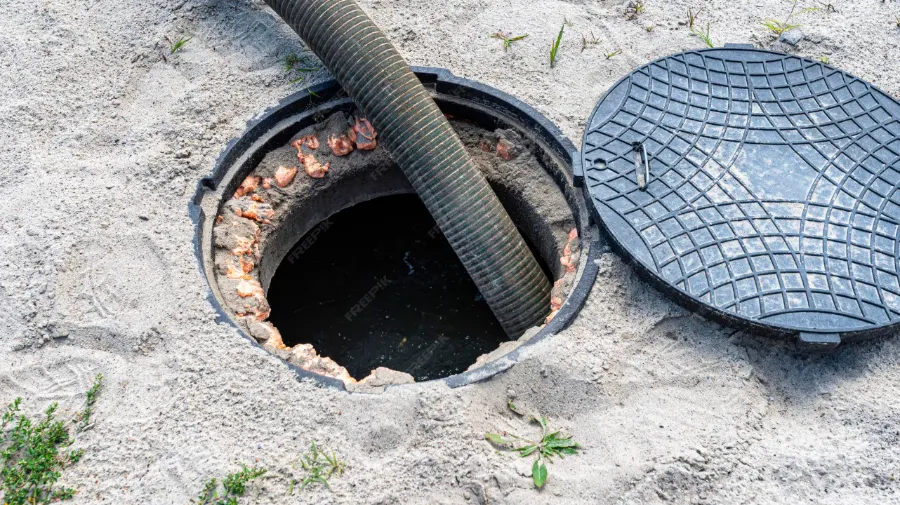
Septic system installation cost in Western North Carolina depends on the system the county permits, the soil and slope, rock, how far the tank and field sit from the house, and how hard the site is to reach. There is no fair flat price for a mountain lot, so the honest number comes from a free estimate on the ground once the permit is in hand.
The permit sets the starting point
Your county improvement permit and construction authorization decide most of what you pay for. They set where the tank goes, where the drain field goes, what type of system it is and how the trenches are laid out. Under North Carolina law, no system can be installed without them.
A conventional gravity system on a gentle slope is the simplest dig. A site that needs a pump, a longer trench layout or an engineered design is more work and more material. Nobody can price an installation fairly before that paperwork exists, because the plan is what gets built. If you are still waiting on the soil evaluation, start with our perc test guide.
Slope, soil and rock
Mountain ground is where most of the variation comes from. Trenches on a slope have to hold the depth and fall on the plan, which is slower than digging across a flat field. Red clay is heavy, holds water and is hard to work when wet.
Rock close to the surface can turn a quick trench into a long day. Nobody knows how much is down there until the bucket finds it. When it shows up, you hear about it before the work or the price changes. Weather plays a part too. Wet weeks can push septic digging back, since a drain field area should not be rutted by machines or worked while the soil is saturated.
Distance, access and the line to the house
The tank has to connect to the house, and the field to the tank. The longer those runs, the more trench there is to dig, bed and backfill. A tank close to the foundation on open ground is quick. A field far downhill, through woods or past a creek, is not.
Access counts as much as distance. If the machine cannot reach the field area because the drive is narrow or washed out, that has to be fixed first. The tank also has to be delivered and set, so the truck needs a route in and room to work. Our utility trenching covers the line runs between the house, tank and field.
Clearing and site prep around the system
Plenty of new homesites are still wooded when the permit comes through. The tank and field area need to be cleared, and sometimes stumps pulled, before the trenches go in. Clearing that ignores the permitted area can damage the very soil the system depends on, so the order matters.
Doing the clearing, the pad, the drive and the septic with one crew saves bringing machines back. It keeps the site from being dug twice and means one person is watching where trucks drive and where dirt is piled. See land clearing for what that first step covers on a mountain lot.
Grading, cover and the costs people forget
After the system is inspected and backfilled, the field area is graded so surface water runs off it rather than onto it. Bare ground on a slope then needs seed and straw or another cover before the next storm.
Several costs sit outside the dig itself. County fees for the permit and inspections. The tank and other materials. A surveyor if lines are unclear. Any well or water line work. Ask what is in a quote and what is not. A low number that leaves out backfill, grading or cleanup is not really a low number once the job is done.
How to keep the price down
Get the soil evaluation done early, before you design a house around the wrong spot. Keep the permitted field area off limits to trucks, parking and stockpiles. Plan the house, drive and septic together so no trench runs through finished work.
Tell us about access problems at the estimate, not on install day. And if your timeline allows, avoid scheduling the dig in the wettest weeks of the year. Ben will walk the site, look at your permit and give you a price for the job in front of you before anything starts. See our septic installation page, then call (828) 900-1749 or send the form for a free estimate.
The short version
- The county permit sets the system type and layout, and that drives most of the price.
- Slope, clay and rock change how long the digging takes.
- Long runs and poor access add trench work and machine time.
- Clearing, pad, drive and septic done by one crew keeps the site from being dug twice.
- Ask what a quote includes: backfill, grading and cover are part of a finished job.
Quick answers
Quick answers
How much does it cost to put in a septic system in Western NC?
It depends on the system type the county permits, slope, rock, distance from the house and access. A flat figure from the internet does not account for any of that. The estimate is free and done on the ground once the permit is issued.
Do I need a permit before a septic system goes in?
Yes. North Carolina requires an improvement permit and a construction authorization from the local health department before a system is installed. In Buncombe County that starts with Environmental Health Services.
What is the most expensive part of a septic installation?
On mountain lots it is usually whatever the site throws at the dig: rock in the trenches, a long run to the field, steep ground or poor access. The system type on the permit matters too, since pumps and engineered designs add parts and work.
Can septic work be done at the same time as clearing and grading?
Yes, and it usually should be planned together. The field area has to be protected while the pad and drive are built, so one crew handling the whole sequence keeps machines and stockpiles off it.
See our septic installation service or call (828) 900-1749.